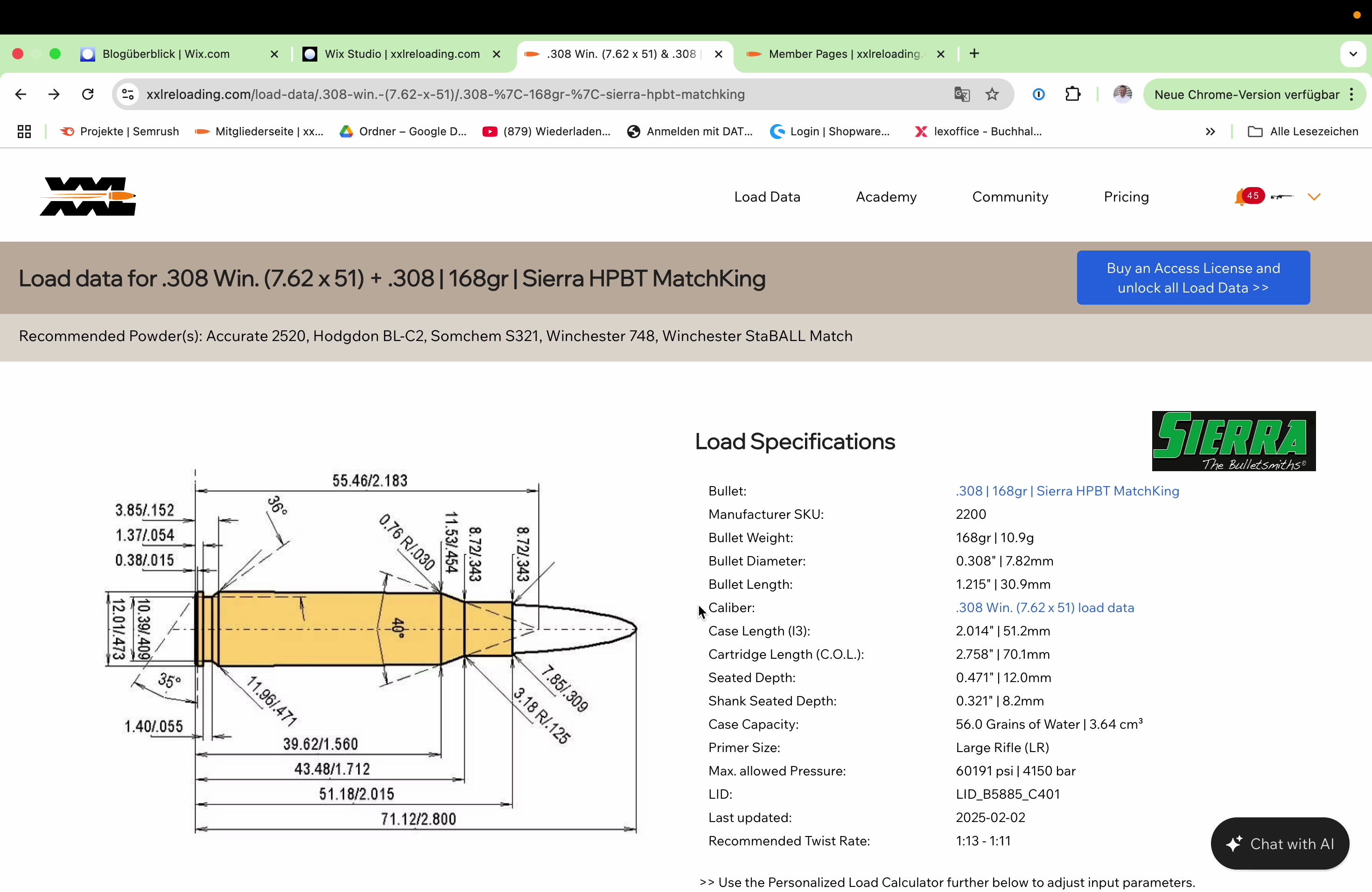
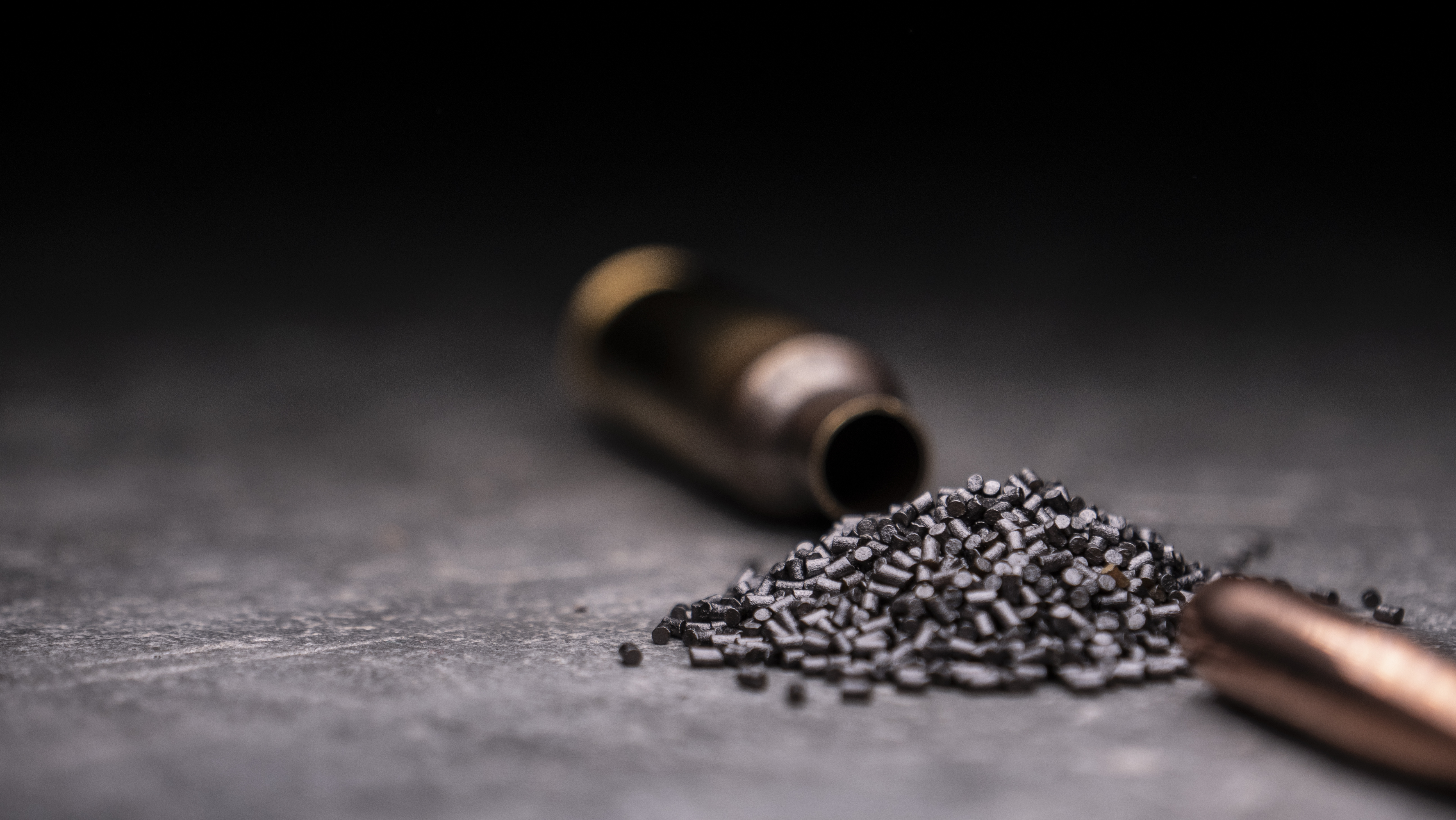
In recent months we have increasingly received requests for load data with fill rates of 105–120%, meaning loads where the powder charge is physically compressed inside the case. While compressed loads are not uncommon in certain cartridges, we intentionally do not provide load data beyond a defined fill rate range. The reason for this is primarily related to model reliability and safety.
The Challenge of Modeling Compressed Loads
Our load data relies on internal ballistics models to simulate how a cartridge behaves during ignition and bullet acceleration. These models estimate parameters such as pressure development, powder burn behavior, and muzzle velocity based on known powder characteristics.
For normal load conditions, these powder characteristics—such as burn rate, energy release, and combustion efficiency—can be modeled with reasonable accuracy. However, once a load becomes heavily compressed, the physical behavior of the powder can change in ways that are difficult to predict.
Powder Grain Structure Matters
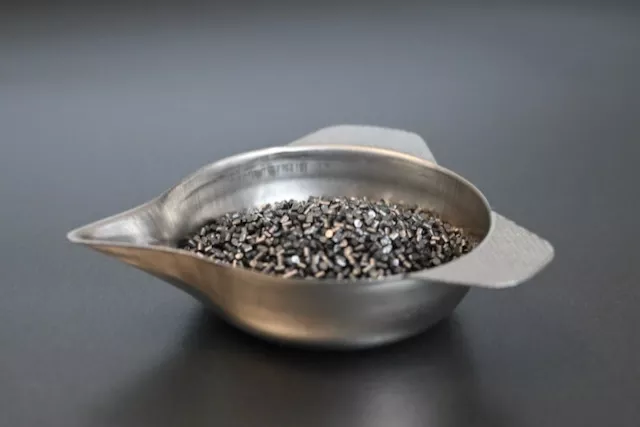
Powder performance is strongly influenced by the geometry and structure of the powder grains. The shape, surface area, coatings, and internal porosity of the grains all affect how the powder ignites and burns.
When a load is compressed to fill rates above roughly 100%, the powder grains are no longer simply resting inside the case. Instead, they may become deformed, compacted, or even partially crushed during the seating of the bullet.
This mechanical compression can alter the effective grain structure and change the way the powder burns.
Compression Can Change Burn Rate
One consequence of grain deformation is that the effective burn rate of the powder can increase. In other words, a powder that normally burns at a certain rate under standard loading conditions may burn noticeably faster when highly compressed.
Unfortunately, the degree of this change varies significantly depending on:
the specific powder formulation
the grain shape and coating
the amount of compression
the cartridge geometry
Because of these variables, it is not possible to reliably quantify how much the burn rate changes once the powder grains are compressed.
The Risk for Ballistic Calculations
Internal ballistics simulations depend on accurate assumptions about powder behavior. If the actual burn rate becomes significantly faster than assumed in the model, the simulation may underestimate peak chamber pressure.
In extreme cases, this could lead to predicted loads appearing safe in the software while actually producing dangerously high pressures in reality.
Since we cannot reliably predict how powder characteristics change under heavy compression, providing calculated load data in that range would compromise the safety and reliability standards we aim to maintain.
Why We Restrict Fill Rate Limits
For these reasons, xxlreloading.com intentionally restricts the maximum fill rate allowed in the calculation models. This ensures that the predicted pressures and velocities remain within a range where the underlying powder models are still valid.
Allowing fill rates far above 100% would introduce a level of uncertainty that makes it impossible to guarantee the reliability of the calculated results.
Safety Comes First
Compressed loads may work in specific real-world setups and are sometimes used by experienced reloaders. However, accurately predicting their behavior requires experimental pressure testing, not purely mathematical modeling.
Our goal is to provide reliable and safe load simulations. Restricting extreme compression levels is an important part of ensuring that the calculations remain trustworthy. This is our key objective for xxlreloading.com and our new website apexload.pro.